
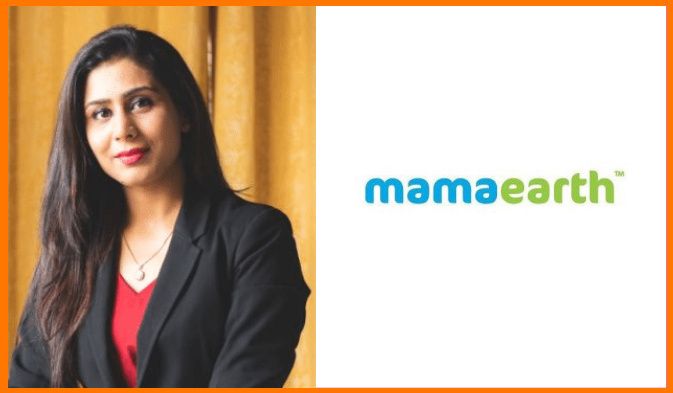
Mamaearth, one of India’s most prominent direct-to-consumer personal care brands, was founded in 2016 by husband-and-wife duo Ghazal Alagh and Varun Alagh, who built the company under their parent entity Honasa Consumer, growing it from a personal, family-driven need into one of India’s most recognizable toxin-free personal care brands within less than a decade.
The company’s founding story is closely tied to Ghazal Alagh’s own personal experience as a new mother. After struggling to find personal care products for her infant son that she felt confident were genuinely free from harmful chemicals, she began exploring and formulating her own alternatives, an experience that directly inspired the founders to build a brand specifically centered around toxin-free, natural ingredient-based personal care products, initially focused on baby care before expanding into broader skincare and haircare categories.
Ghazal Alagh brought a background in engineering and design to the venture, having previously worked in creative and digital marketing roles before co-founding Mamaearth. This background proved valuable for building the brand’s distinctive visual identity and its early digital-first marketing approach, which played a significant role in how the company built initial awareness and customer trust during its early growth phase.
Varun Alagh, the company’s co-founder and chief executive officer, brought considerable prior experience in the consumer goods sector, having previously worked at Marico and other established consumer companies before co-founding Mamaearth. This background in traditional consumer goods marketing and operations complemented Ghazal’s more creative and product-development-focused contributions, giving the founding team a genuinely complementary combination of skills spanning brand building, operations, and go-to-market strategy.
Mamaearth’s early growth strategy leaned heavily on digital-first distribution and marketing, building direct relationships with customers online before expanding into offline retail, a sequencing that reflected broader trends among India’s emerging direct-to-consumer brands during the mid-to-late 2010s, when e-commerce infrastructure and digital payment adoption were expanding rapidly enough to make this kind of digital-first growth strategy genuinely viable at scale for the first time in the Indian market.
The brand’s core positioning around toxin-free formulations, avoiding ingredients like parabens, sulphates, and mineral oil that the founders identified as common concerns among health-conscious Indian consumers, helped Mamaearth differentiate itself within an increasingly crowded personal care market, tapping into a growing consumer segment specifically seeking products marketed around ingredient transparency and perceived safety, particularly for products used on infants and young children.
The company’s growth trajectory included substantial venture capital investment as it scaled, along with an expansion well beyond its original baby care focus into a broader personal care portfolio spanning skincare, haircare, and other categories, ultimately culminating in Honasa Consumer’s initial public offering, marking a significant milestone for a brand that began from one mother’s personal search for safer products for her own child.
Mamaearth’s rise also reflected and contributed to a broader shift within India’s personal care market toward direct-to-consumer brands built on ingredient transparency and digital-first customer relationships, a model that a number of subsequent Indian personal care startups have since sought to replicate, using Mamaearth’s growth trajectory as something of a reference case for building a scaled, digitally native consumer brand within the Indian market.
The founding story of Mamaearth illustrates a pattern seen across many successful consumer brands more broadly: a genuine, personally experienced problem that a founder couldn’t find an adequate existing solution for, addressed through direct product development, ultimately scaling into a business serving millions of customers facing that same underlying concern the founders originally set out to solve for their own family.
The brand’s trajectory from a personal solution to a publicly listed company also illustrates how quickly India’s direct-to-consumer sector matured over the course of less than a decade, with the infrastructure for digital payments, e-commerce logistics, and social media marketing all developing rapidly enough during this period to support the kind of fast national scaling that would have been considerably harder to achieve for a similarly positioned brand launched even five years earlier.
Ghazal and Varun Alagh have also spoken publicly about the challenges of scaling a founder-led brand while maintaining the personal, mission-driven positioning that originally distinguished Mamaearth from larger, more established personal care competitors, a tension many successful direct-to-consumer brands eventually face as they grow well beyond their original, smaller founding audience.