
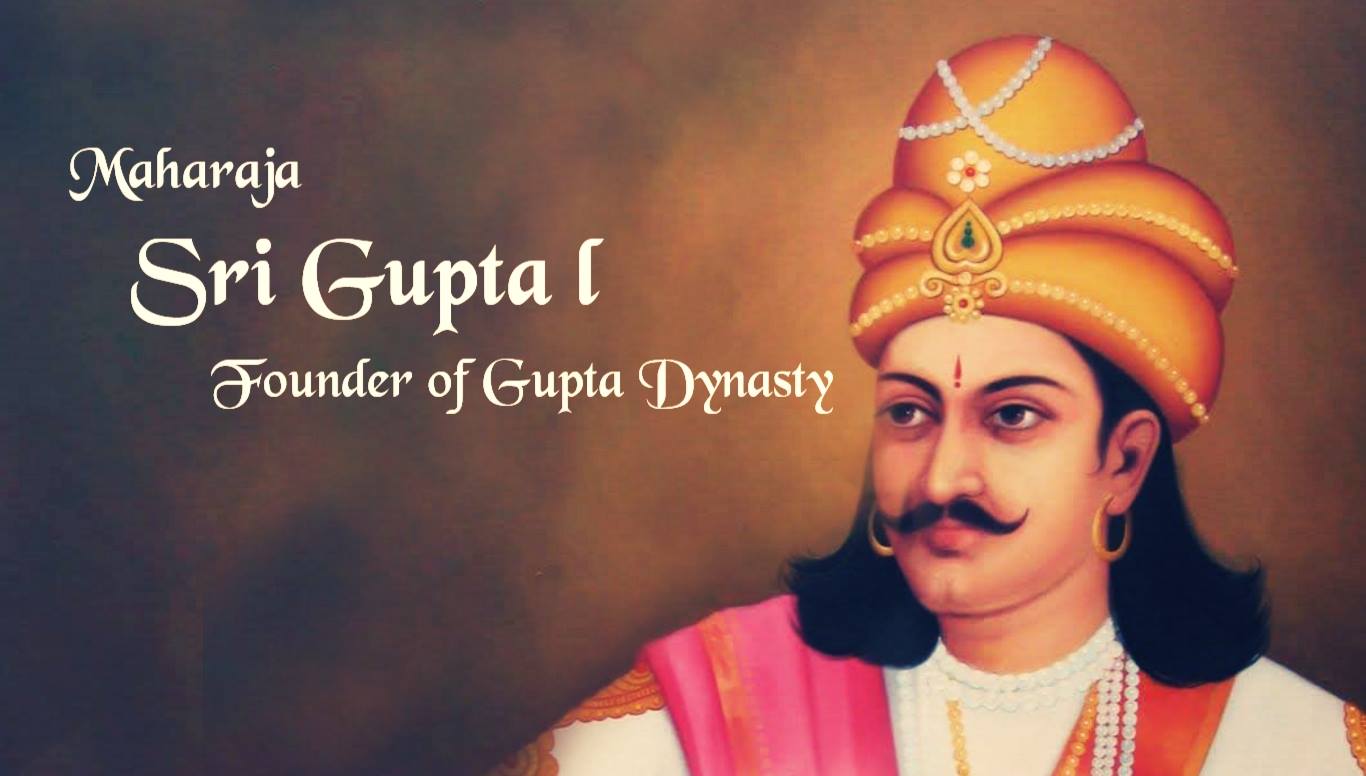
The Gupta dynasty, widely regarded as presiding over what historians often call the golden age of ancient India, was founded by a ruler named Sri Gupta, who is generally believed to have established the earliest foundations of Gupta rule sometime around the late third century CE, in the region of Magadha in present-day Bihar. Historical records about Sri Gupta himself remain relatively sparse, and much of what is known comes from inscriptions and later dynastic records rather than extensive contemporary documentation from his own reign.
Sri Gupta is generally believed to have held a relatively modest position, sometimes described in historical sources using a title suggesting local or regional chieftainship rather than the grand imperial titles later Gupta rulers would claim for themselves. This modest starting point makes the dynasty’s later transformation into one of ancient India’s most celebrated empires all the more historically notable, reflecting a gradual, multi-generational consolidation of power rather than an empire built suddenly by a single, dominant founding figure.
Sri Gupta was succeeded by his son, Ghatotkacha, about whom similarly limited historical detail survives, though he is generally understood to have continued consolidating the family’s regional authority within Magadha, laying further groundwork for the dynasty’s subsequent expansion under his own successors.
The dynasty’s transformation into a genuine imperial power began in earnest under Chandragupta I, grandson of Sri Gupta, who ascended to power around 320 CE, a date that historians commonly treat as marking the formal beginning of the Gupta Empire as a significant imperial power, distinguishing it from the more modest regional authority his grandfather and father had held. Chandragupta I is credited with adopting the imperial title Maharajadhiraja, meaning great king of kings, signaling a genuinely expanded ambition and scope for Gupta rule.
A significant factor in Chandragupta I’s rise involved his marriage to Kumaradevi, a princess of the Lichchhavi clan, a politically advantageous alliance that is widely believed to have provided both expanded territory and enhanced political legitimacy for the emerging Gupta state, illustrating how strategic marriage alliances played a genuinely significant role in territorial consolidation during this period of ancient Indian history.
The dynasty reached its greatest territorial extent and cultural flourishing under Chandragupta I’s successors, particularly Samudragupta and Chandragupta II, who expanded Gupta control across a large portion of the Indian subcontinent through a combination of military campaigns and diplomatic alliances, while the empire simultaneously became renowned for extraordinary achievements in mathematics, astronomy, literature, and the arts, a period historians commonly reference when describing this era as a golden age.
Understanding the difference between Sri Gupta as the dynasty’s founding figure and Chandragupta I as the ruler generally credited with establishing the Gupta Empire as a significant imperial power helps clarify a distinction that sometimes causes confusion in casual historical references. Sri Gupta founded the family line and its earliest, more modest regional authority, while Chandragupta I is more precisely credited with founding the Gupta Empire in the fuller imperial sense historians typically mean when discussing this celebrated period of ancient Indian history.
The Gupta period’s legacy extends well beyond its territorial achievements, having produced foundational contributions across mathematics, including significant advances associated with the concept of zero and the decimal number system, alongside major achievements in astronomy through scholars like Aryabhata, and a rich flowering of Sanskrit literature and classical Indian art and architecture that continues to be studied and celebrated as a high point of ancient Indian civilization.
For anyone researching the origins of the Gupta dynasty, the most historically precise answer distinguishes between Sri Gupta as the founder of the dynastic line itself, beginning around the late third century CE, and Chandragupta I as the ruler generally credited with transforming that lineage into the substantial imperial power that would go on to define one of ancient India’s most celebrated historical periods.
This distinction between dynastic founder and imperial founder is a pattern that recurs across many ancient dynasties worldwide, where a modest founding figure establishes a family line that only later, sometimes generations afterward, achieves genuine imperial scale under a more ambitious or capable successor. Recognizing this pattern helps contextualize how gradually many of history’s celebrated empires actually formed, rather than emerging suddenly from a single founding act.
Modern historical scholarship on the Gupta period continues to draw substantially on inscriptional evidence, including the celebrated Allahabad Pillar inscription documenting Samudragupta’s military campaigns, illustrating how much of what is known about even the dynasty’s earliest, more obscure founding generations has been pieced together gradually from this kind of scattered epigraphic evidence rather than from any single, comprehensive contemporary historical record.