
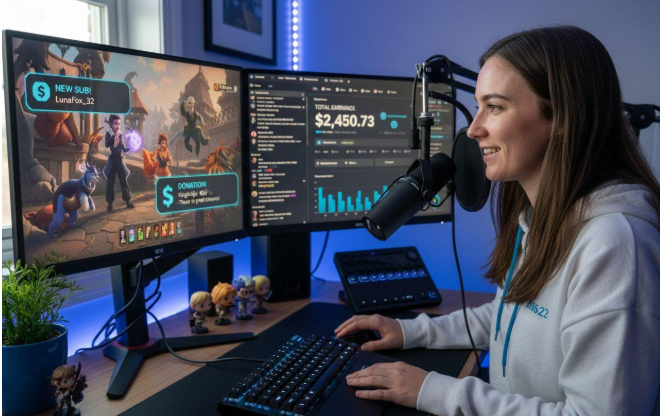
For many people, online gaming begins with a simple desire to have fun. Someone opens a game after a long day, joins friends for a few matches, or spends the weekend exploring a virtual world. At first, gaming seems like nothing more than a hobby. However, as the digital world continues to expand, that familiar hobby is becoming something much bigger. Online gaming has developed into an industry filled with business opportunities, creative careers, and new ways for people to turn their interests into income.
What makes this transformation interesting is that not every opportunity requires someone to become a professional gamer. Behind every popular game, there is an entire ecosystem of creators, designers, marketers, event organizers, developers, and service providers. Some people build audiences through entertaining videos, while others create digital products, organize competitions, or help gaming communities grow. The journey from passion to profit can take many different forms, depending on a person’s skills, interests, and willingness to learn.
The Gaming Industry Is Bigger Than Playing
When people think about making money from online gaming, their minds often go straight to professional competitions and prize money. Although esports can offer career opportunities for talented players, it represents only one part of the wider gaming economy.
Every successful game needs more than skilled players. It needs compelling content, a recognizable identity, a loyal community, technical support, promotional campaigns, and memorable experiences that encourage people to return. These needs create opportunities for individuals and businesses with different backgrounds.
For example, someone who understands social media may help a gaming brand reach new audiences. A talented graphic designer can create promotional artwork, character illustrations, or visual identities for gaming projects. A person with strong communication skills might manage online communities, while someone with technical knowledge could develop gaming websites, applications, or useful tools.
From a business perspective, the most important lesson is simple: opportunities often appear around a popular activity, not just within the activity itself. People who recognize what players need may discover valuable ways to serve the gaming community.
Content Creation: Turning Entertainment Into an Audience
One of the most visible business opportunities in online gaming is content creation. Streaming platforms and video-sharing websites have allowed ordinary players to share their experiences with audiences around the world.
However, successful gaming content is rarely just about showing gameplay. Viewers often return because they enjoy the creator’s personality, humor, storytelling, knowledge, or ability to make complicated strategies easier to understand. A creator who explains beginner techniques may attract a different audience from someone who produces funny challenges or competitive match highlights.
From the perspective of an aspiring creator, this offers an important advantage. You do not necessarily need expensive equipment or exceptional gaming rajapanen skills to begin. A clear concept, consistent publishing schedule, good communication, and an understanding of the intended audience can provide a foundation for growth.
As an audience develops, several potential revenue streams may become available, including advertising, sponsorships, affiliate partnerships, subscriptions, and voluntary support from viewers. Nevertheless, income is rarely guaranteed. Building a sustainable channel usually requires patience, originality, and the ability to adapt when audience preferences change.
The strongest creators understand that trust matters more than temporary attention. They build relationships with viewers by offering genuine entertainment or useful information instead of relying entirely on sensational claims.
Esports and Gaming Events Create New Careers
Competitive gaming has also opened doors for people who want to build careers around organized events. Esports tournaments bring together players, audiences, sponsors, broadcasters, and event professionals in a shared environment.
Professional players may receive income through salaries, tournament prizes, sponsorships, and content partnerships. Yet the business behind esports extends far beyond the competitors themselves. Coaches, analysts, commentators, tournament administrators, production crews, photographers, and marketing specialists all contribute to the experience.
Consider a small community tournament organized in a local gaming café or through an online platform. Even a modest event may require registration management, scheduling, technical support, promotional materials, and communication with participants. Someone who can coordinate these details effectively may turn event organization into a service business.
From the viewpoint of an entrepreneur, starting small can be a practical approach. Rather than immediately attempting to organize a major competition, an organizer can begin with a focused community event, learn from participants, and gradually improve the format.
Success depends on reliable planning, transparent rules, fair competition, and a positive experience for everyone involved. A well-organized event can build a reputation that leads to future partnerships and larger projects.
Digital Products and Services Offer Room for Innovation
Another promising area lies in products and services designed specifically for gamers. As gaming communities grow, players increasingly look for tools that improve convenience, communication, customization, and performance.
Developers might create statistics dashboards, community management tools, training applications, or websites that help players find teammates. Artists can offer original illustrations, stream overlays, emotes, and other visual assets. Writers may produce strategy guides, tutorials, newsletters, or gaming-related articles.
There are also opportunities in educational services. Experienced players can teach specific techniques, while technology professionals can create tutorials about game development, video editing, or streaming setup. The value comes from solving a genuine problem or helping someone achieve a clear goal.
For a beginner interested in entrepreneurship, identifying a small, specific need can be more effective than attempting to build a product for every gamer. A simple tool that saves time for a particular community may have a clearer purpose than a complicated product without a defined audience.
Of course, digital products still require research, testing, customer support, and responsible marketing. Intellectual property rights must also be respected. Using another company’s characters, artwork, or branding without permission can create legal and commercial problems, so original designs and properly licensed assets are important.
Gaming Communities Can Become Valuable Business Networks
Online gaming is built around interaction. Players form teams, share knowledge, exchange recommendations, and develop communities around common interests. These relationships can create opportunities that extend beyond entertainment.
A gaming community may eventually support a podcast, an online publication, a merchandise business, a coaching service, or a series of sponsored events. Some communities become valuable spaces for networking because their members share interests and regularly exchange ideas.
From the perspective of a community manager, success is not simply measured by the number of members. It also depends on participation, trust, and the quality of interactions. A smaller community with active members may offer more value than a large group where conversations rarely develop.
Businesses that participate in gaming communities need to approach them respectfully. People generally respond better to useful information, honest communication, and relevant offers than to aggressive promotion. Supporting a community before attempting to sell something can help establish credibility.
This demonstrates that business opportunities in gaming are not always created by technology alone. Sometimes they emerge from understanding people and creating environments where they enjoy spending time.
Marketing and Brand Partnerships Are Changing the Game
As gaming audiences have expanded, companies from different industries have become interested in reaching players through digital entertainment. This has created opportunities for marketing agencies, independent creators, designers, and brand consultants.
Gaming-related campaigns may involve sponsored videos, influencer partnerships, product placements, tournament sponsorships, or special promotional events. Companies may also need professionals who understand gaming culture well enough to communicate with audiences without making campaigns feel unnatural.
For marketers, the challenge is to recognize that gamers are not one uniform group. Different games attract different audiences, and players have varying interests, spending habits, and expectations. A strategy that works for a competitive esports audience may not suit a casual mobile gaming community.
Effective campaigns begin with research and respect for the audience. Partnerships should be transparent, promotional claims should be accurate, and sponsored content should be clearly disclosed. These practices help protect both the audience and the reputation of the businesses involved.
Turning Passion Into Profit Requires a Business Mindset
Enjoying games is a good starting point, but passion alone does not automatically create a profitable business. Anyone hoping to earn income from gaming needs to understand the practical side of entrepreneurship.
The first step is identifying a specific opportunity. Instead of asking only how to make money from gaming, consider what you can offer that another person genuinely needs. It might be an editing service, a useful guide, a community event, a digital design, or a specialized technical solution.
The next step is testing the idea on a manageable scale. Talk to potential customers, examine existing alternatives, estimate costs, and determine whether people are willing to pay for the proposed service. Small experiments can reveal weaknesses before significant money or time is invested.
Financial planning is equally important. Revenue is not the same as profit. Equipment, software subscriptions, advertising, platform fees, taxes, and other operating expenses can reduce earnings. Maintaining realistic expectations and tracking expenses can help a small gaming business remain sustainable.
It is also wise to avoid promises of guaranteed income. Gaming-related work can be competitive, and audience growth or sales may take considerable time. Building another source of income while developing a gaming project can reduce financial pressure during the early stages.
The Future of Gaming Entrepreneurship
Emerging technologies may create even more opportunities in the years ahead. Artificial intelligence can assist with editing, translation, analytics, and certain development tasks. Cloud gaming may broaden access to games, while virtual and augmented reality could introduce new forms of interactive entertainment.
These developments may create demand for new tools, specialized content, educational resources, and creative services. At the same time, technology will not remove the need for original thinking, strong communication, ethical judgment, and an understanding of customers.
Entrepreneurs who combine technical awareness with genuine knowledge of gaming communities may be better positioned to recognize emerging needs. However, new technologies should be evaluated carefully rather than treated as automatic paths to success.
The most promising opportunities will likely come from creating real value, whether through entertainment, education, convenience, creativity, or community building.
Conclusion: A Hobby Can Become the Beginning of Something Bigger
The journey from passion to profit in online gaming is not limited to becoming a famous streamer or winning a major tournament. It can begin with a small service, a useful digital product, a creative channel, or a community event that solves a real problem.
For players, gaming provides enjoyment and connection. For creators, it offers a platform for expression. For entrepreneurs, it presents a growing landscape of potential customers, partnerships, and new ideas.
The important difference lies in how people approach these possibilities. Passion provides the motivation to begin, but research, consistency, financial discipline, and a willingness to learn help turn that motivation into a sustainable business.
Online gaming has already changed how people play, communicate, and experience digital entertainment. Its expanding business ecosystem shows that it can also change how people work and build careers. For anyone willing to look beyond the screen, a favorite hobby may become more than a way to spend free time. It may become the starting point for a meaningful professional journey.