
Key Takeaways
- Safe loading begins before freight or equipment enters the trailer.
- Clear assignments reduce waiting, duplicate work, and missed checks.
- Trailer movement, forklift traffic, dock edges, damaged pallets, and clutter require daily attention.
- Good staging and housekeeping can support both safer work and more dependable shipment timing.
- A few useful metrics can reveal recurring problems before they become costly disruptions.
Why Loading Workflows Deserve a Fresh Look
Warehouse docks in Winston-Salem often bring together inbound deliveries, outbound orders, powered equipment, pedestrian traffic, and strict carrier schedules in one compact area. A well-planned warehouse loading process helps teams manage those competing demands without treating speed and safety as opposing goals.
When the workflow is unclear, small issues can multiply quickly. A trailer may wait because freight was staged at the wrong door, a loader may search for missing paperwork, or a forklift operator may need to stop repeatedly for pedestrians in an unmarked travel path. Planning the sequence before work starts gives every person a clearer path through the shift.
This matters in a regional logistics environment where warehouses may handle mixed pallet loads, floor-loaded cartons, fragile goods, or orders with multiple delivery stops. The safest loading pattern depends on the shipment, packaging, trailer configuration, route, and delivery order. No single arrangement is suitable for every load.
A simple example illustrates the difference. If one team member is checking labels while another begins loading without a shared plan, freight may need to be moved again after the order is discovered to be incorrect. Rework takes time, increases equipment movement, and can expose workers to avoidable hazards.
Upstream organization also affects what happens at the dock. Accurate warehouse sorting can make it easier to stage freight by route, priority, handling requirement, or delivery sequence before the trailer arrives.
Start With a Simple Pre-Loading Check
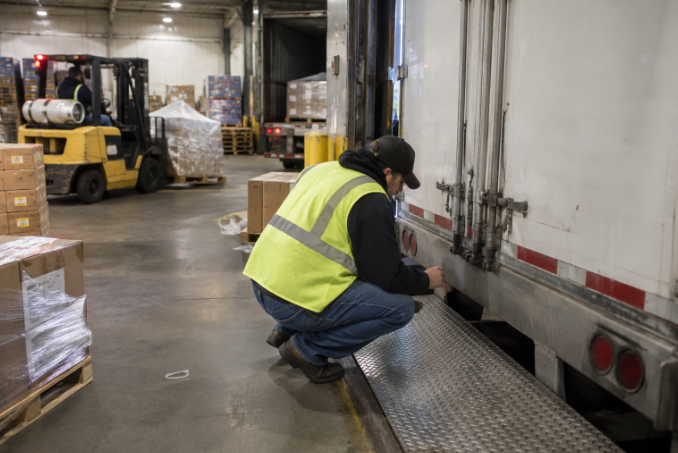
A brief pre-loading check creates a controlled start to the job. Before moving freight, the team should:
- Confirm the assigned trailer, dock door, shipment paperwork, and load priority.
- Review the load plan and identify any special handling requirements.
- Inspect the dock plate or leveler, visible trailer floor, and loading surfaces.
- Remove loose stretch wrap, spills, broken pallets, and other trip hazards.
- Verify that the trailer is secured before people or equipment enter it.
- Confirm that lighting, radios, and other communication tools are working.
Teams can use the warehouse hazard controls outlined in federal warehouse safety guidance to support daily attention to dock edges, aisles, forklifts, and material-handling conditions.
Give Every Person a Clear Role
Loading becomes more predictable when one person coordinates the sequence and every worker understands their assigned task. Common roles include the dock lead, forklift operator, loader, checker, and paperwork coordinator. In smaller crews, one person may handle multiple duties, but responsibilities should still be clear before the load begins.
Agree on a consistent way to signal when work starts, pauses, or ends. Radios, hand signals, visual indicators, or direct verbal confirmation may work depending on noise levels and facility rules. New and temporary workers should receive task-specific instruction before entering an active loading area.
Build a Safer Freight Sequence
A sound freight sequence protects the shipment while leaving workers enough room to move and inspect the load. When the load design allows, place stable, heavier freight lower in the trailer, keep crushable items away from pressure points, and distribute weight evenly. Labels and delivery identifiers should remain accessible when practical.
Use approved blocking, bracing, straps, or other securement methods when the freight and transport conditions require them. Before closing the trailer, conduct a final stability check. The goal is not merely to fill available space. It is to create a load that can be handled, transported, and delivered with fewer avoidable complications.
Control Forklift and Pedestrian Movement
Powered industrial trucks and pedestrians should be separated whenever the facility layout permits. Clearly marked travel lanes, designated crossing points, barriers near dock edges, and restricted areas help workers understand where they should and should not be.
Operators should slow down near blind corners, congested staging zones, and trailer entrances. Pedestrians should stay out of trailers while powered equipment is entering or exiting. Mirrors, warning lights, signs, and trained spotters can help where visibility is limited. Only trained and authorized workers should operate powered industrial trucks.
Inspect Equipment Before It Creates a Delay
Short inspections at the beginning of a shift can prevent a problem from disrupting a full loading cycle. Check forklift tires, forks, brakes, warning devices, restraints, and seat belts, as well as pallet jacks, dock levelers, dock plates, trailer restraints, and supports. Damaged equipment should be removed from service and reported promptly.
Regular powered industrial truck inspections can help identify defects before a worker relies on the equipment in a crowded dock area. Recording recurring issues also provides supervisors with useful information for maintenance planning.
Use Housekeeping as a Productivity Tool
Clean floors and open aisles reduce unnecessary stops. Remove discarded wrap, straps, damaged wood, loose cartons, and empty pallets promptly. Keep staging areas marked, and avoid storing freight in equipment lanes, pedestrian paths, or near emergency exits.
Housekeeping works best when it has an owner. Assign cleanup expectations during the shift and complete a quick end-of-shift reset so the next crew begins with an organized workspace rather than yesterday’s obstacles.
Reduce Trailer Waiting and Rework
Improving speed does not require asking people to rush. Prepare labels, paperwork, pallets, and equipment before the trailer is ready. Stage freight in loading order near the assigned door, and use one load plan that the dock lead, checker, and equipment operators can follow.
Record the reason for delays, including missing freight, damaged packaging, equipment problems, incorrect paperwork, or blocked staging space. Reviewing repeated causes each week can reveal whether the real issue is layout, scheduling, training, or equipment reliability.
Track a Few Useful Loading Metrics
- Average loading time per trailer
- Trailer wait time before work begins
- Freight damage reports and shipment corrections
- Equipment-related delays
- Near misses and reported hazards
- Loads completed according to schedule
The most useful metric is one that helps the team make a decision. For example, frequent delays at a single dock door may indicate poor staging, limited lighting, worn equipment, or an avoidable traffic conflict.
Train for Real Conditions
Written instructions are useful, but short demonstrations help workers apply them in the actual environment. Training should account for noise, limited visibility, weather near open doors, mixed traffic, and changing freight types. Workers should know how to report unsafe equipment, trailer movement, blocked exits, damaged freight, and unclear instructions.
Refresher training is especially useful after a near miss, an incident, an equipment change, a process update, or a major change in freight volume. Frontline workers can often identify delays and confusing steps that are not obvious on a checklist.
Common Warehouse Loading Questions
What should be checked before loading begins?
Confirm the trailer and dock door, inspect the floor and loading equipment, check trailer security, review freight and paperwork, remove hazards, verify lighting and communication, and make sure workers understand their roles.
How can a warehouse load faster without increasing risk?
Better staging, dependable equipment, clear assignments, stable freight, and fewer interruptions usually improve loading speed more reliably than asking workers to move faster.
What are common loading dock hazards?
Common concerns include trailer movement, dock edges, forklift traffic, unstable freight, poor housekeeping, limited visibility, damaged equipment, and unclear communication.
A Practical 10-Minute Loading Review
- Walk the dock and remove immediate hazards.
- Confirm the trailer, dock door, and shipment details.
- Check the trailer restraint and loading equipment.
- Review roles, communication signals, and freight sequence.
- Verify that freight is staged in the correct order.
- Inspect pallets, cartons, labels, and visible damage.
- Separate pedestrian and equipment traffic.
- Complete a final count, stability check, and delay record.
Conclusion
A strong warehouse loading process in Winston-Salem, North Carolina depends on preparation, communication, reliable equipment, stable freight, and regular feedback. Treating safety checks as part of everyday productivity can help warehouse teams reduce avoidable delays while creating a more controlled environment for every shipment.