
School transportation directly affects student attendance, family routines, school staffing, and daily confidence in the district. When buses run late, stops change without warning, or drivers lack the information they need, the impact can spread quickly from the curb to the classroom. A modern transportation plan should focus on safer decisions, dependable operations, and clear communication.
Connected tools can help transportation teams respond faster, but technology is most effective when it supports experienced people and well-defined procedures. District leaders looking to evaluate available tools can learn more about school bus GPS tracking options while keeping the larger operational goal in view: getting students to and from school safely and predictably.
Why Bus Operations Need A Modern Plan
Reliable bus service depends on more than a vehicle arriving at a stop. Districts must coordinate route design, driver coverage, vehicle readiness, dispatch decisions, school schedules, and family communication. A late bus may be unavoidable during a road closure or severe weather event, but confusion does not have to be. A practical plan gives staff a consistent way to identify the problem, make a safe decision, and communicate what families need to know.
Start With Clear Goals
Before purchasing software or changing routes, transportation leaders should identify the outcomes they want to improve. Goals should be specific enough to review throughout the school year, such as reducing excessive ride times, improving on-time arrivals, shortening the time required to send delay notices, or improving documentation for inspections and incidents.
Limiting the first phase to two or three priorities helps teams avoid trying to solve every challenge at once. It also makes it easier to explain the project to drivers, school leaders, and families.
Use Live Location Data Wisely
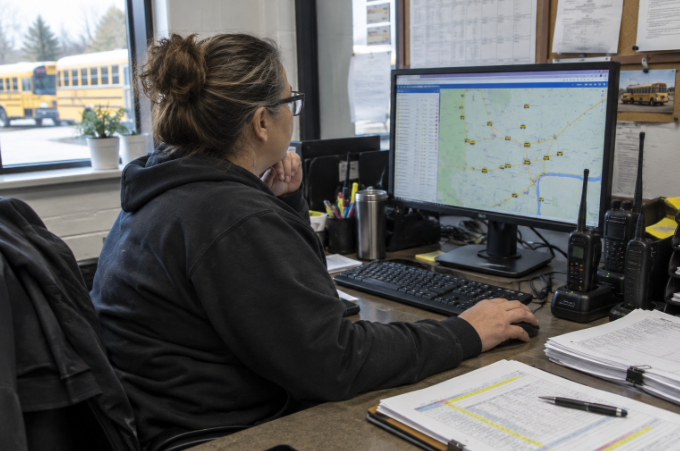
Vehicle location data can give dispatchers a shared view of where buses are operating and where a route may be running behind schedule. It can help staff investigate missed stops, extended delays, unexpected detours, and vehicle issues without relying only on phone calls. However, a map is not a substitute for judgment. Traffic, loading time, weather, and student needs can quickly change an estimated arrival time.
Districts should establish who monitors route status, when drivers should contact dispatch, and how staff confirm unusual location information before sending family alerts. Clear procedures prevent live data from becoming another source of uncertainty.
Improve Route Planning
Efficient routes should never come at the expense of safe stops or reasonable student travel. Route reviews need both reliable records and local knowledge from drivers, dispatchers, school staff, and families.
Key Factors To Review
- Student addresses, school assignments, and transportation eligibility.
- Vehicle capacity, accessibility requirements, and realistic loading time.
- Road width, traffic patterns, bridges, turns, hills, and seasonal conditions.
- Stop visibility, waiting space, walking paths, and street-crossing needs.
- School start times, dismissal procedures, and driver shift limits.
A route that appears fast on a map may be a poor choice if a large bus cannot safely navigate it during snow, heavy rain, or peak traffic. The National Highway Traffic Safety Administration provides guidance for planning safer school bus stops and routes, reinforcing the need to evaluate the full trip rather than mileage alone.
Keep Families Informed
Timely, understandable communication can reduce frustration when a delay is unavoidable. Notices should identify the affected route or stop, explain the situation in plain language when appropriate, and state when families can expect another update. Districts should use multiple communication channels when possible so that families are not dependent on a single app or message type.
Families also need a simple process for reporting an incorrect address, stop assignment, or student transportation record. Arrival estimates should be presented as estimates, particularly during major traffic events or severe weather.
Support Drivers And Dispatchers
New tools should simplify daily work rather than create additional distractions. Drivers need route instructions that are easy to review before departure, with nonessential alerts minimized while the bus is in motion. Dispatchers need a shared view of active routes, incidents, substitutes, and vehicle changes to make decisions quickly.
Training should include realistic practice before the school year begins, plus clear backup procedures for device failures, weak cellular coverage, or power loss. Paper route information and established radio or phone procedures remain important operational safeguards.
Protect Student And Family Data
Transportation systems may contain student names, addresses, schedules, contact information, and travel details. Districts should collect only what is necessary, use role-based access, require strong account protections, and review vendor retention and deletion practices before launch.
Privacy expectations should be clearly written into staff procedures and vendor agreements. Federal student privacy guidance explains that schools may share personally identifiable information in limited circumstances, including with service providers performing services for the institution, but appropriate protections and agreements may be required. Information about student data-sharing practices should therefore be reviewed with district privacy, legal, and technology leaders before it moves into a new system.
Prepare For Delays And Disruptions
Breakdowns, driver absences, road closures, and schedule changes are normal operational risks. Prepared districts document their most common disruptions, assign responsibility for each step of the response, maintain approved family message templates, and define substitute-driver or backup transportation procedures.
After a major disruption, transportation teams should review what happened. Questions might include whether the first alert was timely, whether route changes were clear, and whether drivers had the information needed to operate safely.
Measure Results Over Time
A transportation project should be judged by operational results, not by the number of features in a platform. Useful measures can include on-time pickup and arrival rates, average and longest ride times, missed stops, unplanned route changes, delay-notification time, training completion, family support requests, and the follow-up time for reported safety events.
Build A Practical Rollout Plan
- Review current routes, staffing, communication processes, and recurring safety concerns.
- Choose a small number of priorities that can be measured.
- Verify student, stop, vehicle, and staff-access records before implementation.
- Test the process with a limited group of buses or schools.
- Train drivers, dispatchers, administrators, and family support staff.
- Gather feedback, correct avoidable issues, and expand in stages.
- Review routes, policies, training, and communication practices each term.
Conclusion
Safer, more reliable bus operations come from sound planning, accurate information, trained people, and steady communication. Technology can strengthen those efforts, but it cannot replace practical judgment or clear accountability. A focused 2026 transportation plan starts with everyday problems, protects student information, prepares for disruptions, and improves through regular review.